
11th Floor, Chuangbo Industrial Park, 177 Tianchen Road, High-tech Zone, Jinan City, Shandong Province, China
Imagine controlling light with precision and speed. Electro-optic modulators make this possible, revolutionizing optical communication. These optical modules are crucial in modern communication systems. They manipulate light's intensity, phase, and polarization for fast, reliable data transmission. In this post, you'll learn about electro-optic modulators, their importance in communication, and their key functions.
The electro-optic effect is a phenomenon where an electric field changes how light behaves inside certain materials. Imagine light as a wave traveling through a crystal. When you apply an electric field, this wave's properties—like its speed or direction—can shift. This change happens because the electric field alters the material's refractive index, which controls how light bends and moves.
This effect is key to electro-optic modulators. It lets them control light's intensity, phase, or polarization quickly and precisely. For example, by changing the refractive index, the modulator can speed up or slow down light waves, affecting their phase. Or it can adjust the brightness by modifying how much light passes through.
Electric fields serve as the control knob for electro-optic modulators. When you apply a voltage across the modulator’s electrodes, it creates an electric field inside the electro-optic material. This field tweaks the material's optical properties in real time.
Think of it like tuning a radio dial. The electric field adjusts the "tuning" of the light wave inside the crystal. This adjustment changes the light's characteristics—its amplitude (brightness), phase (wave timing), or polarization (wave orientation)—depending on the modulator’s design.
The speed of this modulation is incredibly fast, often reaching billions of changes per second. This rapid switching enables high-speed data transmission in fiber optic networks, letting us send vast amounts of information over long distances without delay.
The electro-optic effect was first observed in the early 20th century. Scientists discovered that certain crystals, like potassium dihydrogen phosphate (KDP) and lithium niobate (LiNbO₃), change their refractive index when exposed to an electric field. This discovery, known as the Pockels effect, laid the groundwork for modern electro-optic modulators.
Later, researchers developed devices that use this effect to control light in practical ways. Lithium niobate became a popular material because it offers strong electro-optic responses and works well with optical fibers. Over the decades, advances in crystal growth and electrode design have improved modulator efficiency and speed.
Today, electro-optic modulators are essential in telecommunications, laser systems, and emerging quantum technologies. Ongoing research aims to extend the effect's use to visible light and beyond, opening new frontiers in optical communication and computing.
Electro-optic modulators come in three main types, each controlling a different property of light: amplitude, phase, and polarization. Let’s explore how each type works and where they’re commonly used.
Amplitude modulators control the brightness or intensity of light. Imagine a dimmer switch for a lamp — turning it up or down changes how bright the light is. That’s exactly what amplitude modulators do, but at incredibly fast speeds, often billions of times per second.
How it works: When voltage is applied, the modulator changes how much light passes through. This creates a pattern of bright and dim pulses, which can represent digital data like the ones and zeros in computer signals.
Applications: These modulators are essential in fiber optic communications. They help convert electrical data into light signals that travel long distances through cables. Without amplitude modulators, streaming videos or making video calls would be much slower and less reliable.
Phase modulators don’t change light’s brightness. Instead, they shift the timing of the light wave’s peaks and valleys — its phase. Think of it as changing the rhythm of a dance without changing the dancers’ energy.
How it works: Applying voltage adjusts the refractive index inside the modulator, which speeds up or slows down the light wave. This shift creates interference patterns that can carry information in more complex ways than just turning light on and off.
Applications: Phase modulators are used in advanced data encoding techniques, laser stabilization, and optical computing. They enable sending more data through the same fiber by encoding information in the wave’s timing.
Polarization modulators change the orientation of light waves. Light waves can oscillate in different directions — like shaking a rope up and down or side to side. Polarization modulators control this direction.
How it works: By applying an electric field, these modulators act like voltage-controlled waveplates, rotating or scrambling the polarization state of the light.
Applications: Polarization modulation is crucial in quantum communications, sensing, and certain types of laser systems. It helps encode information or control how light interacts with materials.
Electro-optic modulators are made up of several key parts that work together to control light properties precisely and quickly. Understanding these components helps clarify how the device manipulates light signals for various applications.
The optical waveguide acts as the highway for light inside the modulator. It’s a tiny, carefully designed channel that guides the light through the device. The waveguide ensures that light stays confined and travels smoothly from input to output, minimizing losses and maintaining signal integrity. Its small size allows for high-speed modulation, making it essential for fast data transmission.
This is the star of the show. Electro-optic materials, such as lithium niobate (LiNbO₃), BBO, or KTP, change their optical properties when exposed to an electric field. When a voltage is applied, these materials alter their refractive index, which affects how light behaves inside the waveguide. The strength and speed of this change determine how fast and efficiently the modulator can operate. High-quality electro-optic materials are crucial for achieving high performance and low signal distortion.
Electrodes are metal strips or pads placed on or near the electro-optic material. They apply the electric field needed to induce changes in the material’s properties. When a voltage is applied across these electrodes, the electric field penetrates the electro-optic material, causing the desired modulation of light.
Input and output ports are the entry and exit points for light. The input port receives the initial light signal, often from a laser source, while the output port sends the modulated light onward to its destination—be it a fiber optic cable, laser system, or other optical device. Proper alignment of these ports ensures minimal signal loss and maximum modulation efficiency.
Electro-optic modulators play a vital role in many advanced technologies. Their ability to control light's properties quickly and precisely makes them indispensable in various fields.
In telecommunications, electro-optic modulators are the backbone of fiber optic networks. They convert electrical signals into optical signals, enabling high-speed data transfer over long distances. Imagine sending a digital message—these devices turn electrical data into rapid pulses of light, which travel through fiber cables at nearly the speed of light. This process allows for streaming videos, video calls, and internet browsing with minimal delay. For example, amplitude modulators are used to encode data onto laser beams by turning the light on and off billions of times per second, creating a pattern that represents information. Phase modulators, on the other hand, adjust the timing of light waves, increasing the amount of data that can be transmitted simultaneously.
Electro-optic modulators are essential in laser technology. They shape and direct laser beams for applications like industrial cutting, medical procedures, and scientific research. These modulators can control laser intensity, phase, or polarization rapidly and accurately. For instance, in laser surgery, modulators help produce precise laser pulses that target specific tissues without damaging surrounding areas. In manufacturing, they enable lasers to cut or weld with high precision by modulating the laser’s power in real time. Additionally, modulators are used to stabilize laser frequencies, ensuring consistent performance in sensitive experiments and high-precision applications.
Optical computing is a futuristic field where data is processed using light instead of electricity. Electro-optic modulators are key components here. They act like traffic signals, controlling the flow of light-based information inside optical circuits. This approach can dramatically increase processing speeds, potentially surpassing traditional electronic computers. For example, in optical interconnects, modulators encode data onto light signals, which are then transmitted through tiny waveguides. This technology promises faster data transfer, lower power consumption, and smaller device sizes. Researchers are working on integrating these modulators into chips, aiming for ultra-fast, energy-efficient computers that operate at the speed of light.
Electro-optic modulators are crucial in enabling high-speed, high-precision control of light across many industries. They support the backbone of modern communication networks, advance laser technology, and pave the way for next-generation optical computing. As technology progresses, these devices will become even more versatile, smaller, and faster, opening new possibilities in quantum computing, sensing, and beyond.
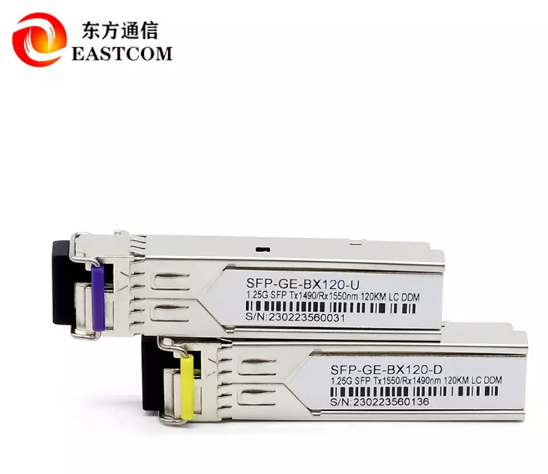
Electro-optic modulators are powerful tools for controlling light in many high-tech fields. They offer several key benefits but also come with some challenges that users should know.
First, these modulators are incredibly fast. They can switch light signals billions of times every second. This speed is essential for modern fiber optic communications, where data moves at lightning pace. Thanks to this rapid switching, streaming videos and video calls become smooth and reliable.
Second, electro-optic modulators use very little power compared to other modulation methods. This low energy use makes them ideal for large networks or devices where power efficiency is critical.
Third, they provide precise control over light properties—intensity, phase, or polarization. This precision allows complex data encoding, which means more information can be sent through the same optical fiber.
Finally, these modulators are versatile. They work in telecommunications, laser systems, and even cutting-edge optical computing. Their adaptability makes them a valuable component across many industries.
Despite their strengths, electro-optic modulators have some downsides. One major issue is their sensitivity to temperature changes. Even small shifts in temperature can affect performance, causing signal drift or distortion. This sensitivity requires careful temperature control or compensation mechanisms in many applications.
Another limitation is the reliance on special materials like lithium niobate or potassium titanyl phosphate. These materials can be expensive and sometimes hard to produce at scale, which may increase device costs.
Size is also a consideration. While smaller modulators are being developed, many current devices are not compact enough for all applications, especially in portable or miniaturized systems.
Lastly, some modulators may introduce unwanted signal distortion or residual amplitude modulation. This effect can reduce signal quality, particularly in ultra-high precision uses.
Temperature changes impact the refractive index of electro-optic materials, altering modulation efficiency. This drift can cause the modulator’s operating point to shift, requiring active bias control or temperature stabilization to maintain consistent performance.
Some designs use multiple crystals arranged to cancel out temperature effects, but these solutions add complexity and cost.
Electro-optic modulators (EOMs) are evolving rapidly, driven by the need for faster, smaller, and more efficient devices. Let’s explore the key trends shaping their future.
The push for smaller modulators is reshaping the industry. Researchers are creating devices tiny enough to fit on microchips, using integrated photonics. These compact modulators can be embedded directly into optical circuits, reducing size and power consumption while boosting reliability.
Miniaturized modulators open doors to wearable tech, smartphones, and other portable devices needing fast optical communication. By integrating modulators with other components like lasers and detectors, manufacturers can build all-in-one photonic chips. This integration reduces cost and improves performance by minimizing losses between parts.
Future modulators aim to handle even higher data rates. Current EOMs already switch light billions of times per second, but new designs target speeds beyond tens or hundreds of gigahertz. This boost allows more data to flow through fiber networks, supporting growing internet traffic and new applications like 8K streaming and virtual reality.
Advances in electrode design, materials, and waveguide engineering help achieve these speeds. For example, traveling-wave modulators synchronize microwave and optical signals to maximize modulation efficiency at ultra-high frequencies. Researchers also explore resonant circuits to amplify modulation signals at specific frequencies while keeping power use low.
Quantum technologies require modulators capable of manipulating quantum states of light with extreme precision. Future EOMs may integrate into quantum computers and communication systems, controlling qubits encoded in photons.
To meet these demands, scientists are investigating new electro-optic materials beyond traditional lithium niobate. These include thin-film lithium niobate, electro-optic polymers, and novel crystals offering stronger effects, lower losses, and compatibility with visible light. For instance, recent breakthroughs show modulators operating efficiently at visible and near-infrared wavelengths, crucial for quantum photonics.
Advanced materials also enable lower drive voltages and better energy efficiency, important for scaling quantum devices and reducing operational costs.
Electro-optic modulators are crucial for controlling light in telecommunications, laser systems, and optical computing. They offer rapid, precise modulation, enhancing data transmission and laser applications. Future advancements focus on miniaturization and integration, promising faster, more efficient devices. Companies like EASTCOM are at the forefront, providing cutting-edge modulators that deliver exceptional performance and value across industries. Their innovative solutions ensure reliable, high-speed optical communication, meeting the demands of modern technology.
A: An electro optic modulator is a device that uses the electro-optic effect to control properties of light, such as intensity, phase, or polarization, by applying an electric field.
A: In telecommunications, an optical module converts electrical signals into optical signals using electro optic modulators, enabling high-speed data transfer over fiber optic networks.
A: Electro optic modulators are crucial in laser systems as they precisely control laser beam properties, enhancing applications like cutting, medical procedures, and research.
A: Electro optic modulators offer fast switching speeds, low power consumption, precise light control, and versatility across various applications, making them valuable in modern technology.
A: Temperature changes can alter the refractive index of electro-optic materials, affecting modulation efficiency and requiring temperature control for stable performance.
