
11th Floor, Chuangbo Industrial Park, 177 Tianchen Road, High-tech Zone, Jinan City, Shandong Province, China
Views: 0 Author: Site Editor Publish Time: 2025-12-18 Origin: Site


In the world of modern networking, the choice of fiber optic transceiver types can often be overwhelming. With a variety of forms and specifications available, it's essential to understand the different types and their applications to make an informed decision. Whether you're setting up a data center, deploying telecommunications infrastructure, or upgrading enterprise networks, selecting the right fiber optic transceiver module is crucial for ensuring optimal network performance. In this article, we'll provide a comprehensive guide to the various fiber optic transceiver types, their features, and how to choose the right one for your network needs.
Different network environments have unique requirements, such as speed, distance, capacity, and compatibility. These varying needs are why fiber optic transceiver types exist in different forms and specifications. Whether it’s for long-distance connections, high-density networks, or specialized high-speed applications, the modularity and versatility of optical transceivers ensure that there’s a suitable option for every scenario.
The evolution of fiber optic transceiver types has been driven by the increasing demand for higher data rates, faster speeds, and longer transmission distances. Over time, industry standards have emerged for different form factors, each designed to meet specific performance requirements. Modules like SFP (Small Form-factor Pluggable) and QSFP (Quad Small Form-factor Pluggable) were developed to meet the growing needs for high-speed interconnects and high-density environments, such as data centers.
The standardization of fiber optic transceiver types has allowed for better compatibility between devices, improved scalability, and cost-effective solutions for various network types. This modular approach also ensures that as network demands grow, existing systems can be upgraded without the need for a complete overhaul.
There are several fiber optic transceiver types, each tailored for different use cases and network requirements. Below, we’ll explore some of the most commonly used modules and their characteristics:
The SFP module is one of the most widely used fiber optic transceiver types. Originally designed to replace the older GBIC (Gigabit Interface Converter) modules, SFP modules are compact, hot-swappable, and support a range of data rates from 1G to 10G. Due to their small size, SFP modules are ideal for applications that require a compact design and space efficiency. Their hot-swappable nature also makes them easy to replace or upgrade without disrupting network services.
These are enhanced versions of the SFP module, designed to support higher speeds. SFP+ supports up to 10G, SFP28 handles 25G, and SFP56 is capable of 50G speeds. These fiber optic transceiver types are commonly used in environments where high-speed data transfer is crucial, such as in data center interconnects, cloud services, and high-performance computing.
For high-density and high-bandwidth environments, QSFP modules (Quad Small Form-factor Pluggable) are often used. These modules support multiple data rates, from 40G to 400G, and are designed for applications requiring high-speed data transmission and high port density, such as large-scale data centers, telecommunications networks, and cloud services. QSFP+ supports 40G, while QSFP28 supports 100G. The QSFP-DD (Double Density) and OSFP (Octal Small Form-factor Pluggable) further increase the density and capacity, making them ideal for next-generation data center infrastructure.
The XFP module was originally designed for 10G Ethernet applications, including long-range connections like those used in SONET/SDH systems. However, the XFP module has largely been replaced by SFP+ and QSFP modules due to their smaller form factor and higher speeds. Despite this, XFP modules are still used in legacy systems or specific long-distance fiber optic links.
These older fiber optic transceiver types are becoming less common as newer, more efficient modules have been developed. However, they are still present in older devices or specific legacy applications. 1×9 modules, for example, were commonly used in early networking equipment, and GBIC (Gigabit Interface Converter) modules were an early attempt at creating hot-swappable optical transceivers. Despite their reduced use, these older types continue to be compatible with certain networking hardware.
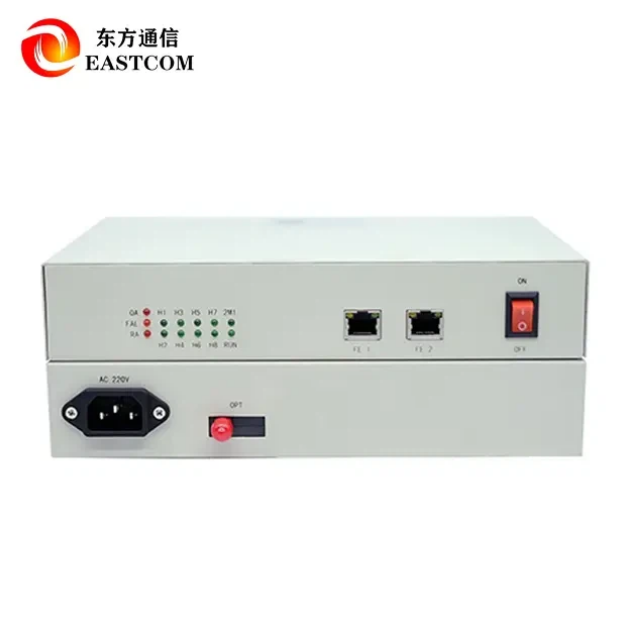
Choosing the right fiber optic transceiver type involves understanding the specific needs of your network. Below are several factors to consider when selecting a module:
The data rate is one of the most important considerations when selecting a fiber optic transceiver. Depending on your network’s speed requirements, you can choose between different types:
1G, 10G, 25G: Standard speeds for enterprise networks, medium-sized data centers, or long-distance connections.
40G, 100G: High-speed interconnects for large-scale data centers, cloud services, and telecom networks.
For example, if your network requires speeds of 100G, you would need to opt for QSFP28 or QSFP-DD modules, which support these high data rates.
Another factor to consider is the distance over which the signal needs to travel. Single mode fiber optic transceivers are suitable for long-distance transmission, while multi-mode fiber optic transceivers are ideal for shorter links. If your network spans several kilometers or more, you'll need single mode transceivers, such as SFP+ or QSFP designed for long-range applications.
Ensure that the fiber optic transceiver type you choose is compatible with your network equipment, including switches, routers, servers, and network interface cards (NICs). Many modules have specific form factors (e.g., SFP, QSFP, XFP) and connector types (e.g., LC, SC) that must align with your devices.
When choosing fiber optic transceiver types, consider the future scalability of your network. It’s often more cost-effective to select a module that supports higher speeds and greater bandwidth than needed at the moment. This will allow for easier upgrades as your network expands, without the need for replacing the entire infrastructure.
In data centers or high-density environments, maximizing space and minimizing power consumption are important considerations. QSFP and QSFP-DD modules offer high-density solutions and low power consumption, making them ideal for these types of environments.
Each fiber optic transceiver type has its own advantages and disadvantages. Let’s explore the trade-offs:
SFP: The SFP module offers excellent flexibility and cost-efficiency. Its smaller size and compatibility with a wide range of devices make it ideal for a variety of applications. However, it has lower bandwidth and density compared to larger form factors like QSFP.
SFP+ / SFP28: These modules offer a good balance between speed and flexibility, suitable for mid-sized networks or enterprise environments. However, they may not be sufficient for high-density applications that require even higher speeds.
QSFP / QSFP-DD: QSFP modules offer higher speeds and port density, making them ideal for large-scale data centers or cloud-based networks. However, they are more expensive and require higher power consumption compared to SFP modules.
XFP / Legacy: While these modules are compatible with older equipment, they are not suitable for modern, high-speed applications. They are generally being phased out in favor of newer, more efficient solutions.
When purchasing fiber optic transceiver types, keep the following tips in mind to avoid mismatches and ensure optimal performance:
Define Network Requirements: Understand your network’s speed, distance, and bandwidth requirements before purchasing a module.
Check Compatibility: Ensure the fiber optic transceiver is compatible with your existing devices and network infrastructure.
Review Optical Parameters: Examine the wavelength, transmit power, receiver sensitivity, and other relevant parameters to ensure they meet your specific needs.
Future-Proof Your Network: Select modules that allow for easy upgrades to higher speeds or bandwidth in the future.
Choose a Trusted Supplier: Work with reputable suppliers like Shandong Dongfang Communication Technology Co., Ltd. to ensure you receive high-quality, reliable products.
There is no one-size-fits-all fiber optic transceiver type—each form factor and module offers specific advantages for different network applications. By understanding your network’s speed, distance, bandwidth, and scalability requirements, you can make an informed decision about which transceiver type to choose. Fiber optic transceiver types like SFP, QSFP, and XFP each have their place, and selecting the right one will maximize your network’s performance, reliability, and future scalability.
If you're looking for high-performance fiber optic transceiver solutions, consider exploring the options available from Shandong Dongfang Communication Technology Co., Ltd. Our advanced products are designed to meet your specific networking needs, providing seamless and reliable connectivity for data centers, telecommunications, and enterprise environments.
What are the different types of fiber optic transceivers?
The main types of fiber optic transceivers include SFP, QSFP, XFP, and SFP+, each offering different speeds, densities, and applications.
How do I choose the right fiber optic transceiver for my network?
Choose the appropriate transceiver type based on your network’s speed, distance, bandwidth needs, and compatibility with existing devices.
What are the benefits of QSFP modules?
QSFP modules offer high data rates, high-density connections, and are ideal for data centers or high-bandwidth applications.
Can I use an SFP module for long-distance transmission?
SFP modules are generally designed for short to medium-distance transmission. For long-distance connections, single mode fiber optic transceivers like QSFP or SFP+ are more suitable.


