
11th Floor, Chuangbo Industrial Park, 177 Tianchen Road, High-tech Zone, Jinan City, Shandong Province, China
Views: 0 Author: Site Editor Publish Time: 2025-12-17 Origin: Site


In today's interconnected world, the demand for high-speed, reliable, and long-distance communication is growing exponentially. Data centers, telecommunication networks, and enterprise systems require the ability to send vast amounts of data across increasingly greater distances with minimal signal degradation. One key component that meets these demands is the single mode fiber optic transceiver. These devices are essential for achieving stable, long-reach, and high-capacity transmission in various network applications. In this article, we will delve into the characteristics of the single mode fiber optic transceiver, its advantages, and how it is the preferred solution for long-reach network connections.
A single mode fiber optic transceiver is a communication device designed for transmitting and receiving data through single-mode optical fiber. Single-mode fiber (SMF) is a type of optical fiber that uses a single light wave to transmit signals over long distances with minimal attenuation. The single mode fiber optic transceiver works by converting electrical signals into optical signals for transmission and then converting them back into electrical signals upon reception.
The main difference between single-mode and multi-mode optical fibers lies in their core diameter and the way light propagates through the fiber. Single-mode fiber typically has a much smaller core (around 8 to 10 microns in diameter) compared to multi-mode fiber, which has a larger core (50 to 100 microns). This smaller core allows single-mode fiber to carry signals over much longer distances without the dispersion that affects multi-mode fiber.
Unlike multi-mode fiber optic transceivers, which are ideal for short-distance communication (typically up to a few kilometers), single mode fiber optic transceivers are designed for long-distance connections, making them perfect for applications such as telecommunications, data center interconnects, and ISP backbone networks.
To fully understand the capabilities of a single mode fiber optic transceiver, it’s important to consider several key technical features that directly affect its performance:
Wavelength and Transmission Distance: Single mode fiber optic transceivers commonly operate at wavelengths of 1310 nm or 1550 nm. These wavelengths are ideal for long-distance communication due to their low attenuation, which allows for the signal to travel over much greater distances. A single mode fiber optic transceiver operating at 1550 nm can transmit data over distances of up to 100 kilometers or more, depending on the transceiver's power and the fiber quality.
Transmit Power and Receiver Sensitivity: The transmit power (the strength of the signal sent from the transceiver) and the receiver sensitivity (the ability of the transceiver to detect weak signals) are critical parameters in determining how far a signal can travel and how well it will perform in a given environment. A single mode fiber optic transceiver is designed to offer high transmit power and low receiver sensitivity to ensure long-distance, high-quality signal transmission.
Fiber Loss and Connector Compatibility: Single mode fibers are designed to minimize fiber loss, allowing the light signal to travel over long distances without significant degradation. The single mode fiber optic transceiver needs to be compatible with the connectors used in the network, such as SC, LC, or MTP connectors, to ensure seamless data transmission and avoid any loss in signal integrity.
Module Form-Factor Compatibility: Single mode fiber optic transceivers come in different form factors, such as SFP, SFP+, XFP, and QSFP, each of which is designed to accommodate specific data rates and networking needs. For example, a single mode fiber optic transceiver designed as an SFP+ module can support data rates up to 10 Gbps, while a QSFP module can support up to 100 Gbps.
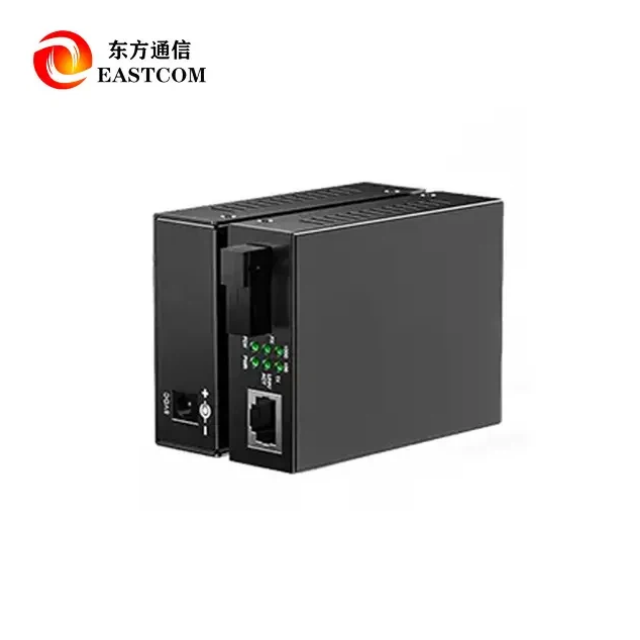
Both single mode and multi-mode fiber optic transceivers have their advantages, but their applications differ depending on the distance and bandwidth requirements of the network.
Long-Distance Connections: Single mode fiber optic transceivers are the go-to solution for long-distance communication. Whether it's between data centers, across cities, or even internationally, single mode technology ensures that the signals remain strong and stable over vast distances, making it ideal for ISP backbone networks, long-haul communication, and metro area networks.
Signal Stability and Low Attenuation: In applications that require high signal integrity over long distances, single mode fiber optic transceivers are preferred. For example, connecting multiple buildings within a campus or establishing long-range telecommunications links requires high stability and low loss, which single mode fibers provide.
High-Bandwidth and High-Reliability Networks: Single mode fiber optic transceivers are essential in networks that demand high bandwidth and reliability. These include enterprise fiber optic backbones, high-performance computing (HPC) clusters, and cloud service providers that rely on stable, high-speed connections over extended distances.
Multimode Fiber Applications: While single mode fiber optic transceivers excel in long-distance and high-capacity applications, multi-mode fiber optic transceivers are better suited for shorter connections. These applications include local area networks (LANs), data center interconnections within a single building, or shorter inter-building connections. Multi-mode fiber offers a more cost-effective solution for these types of connections but lacks the distance and bandwidth advantages of single mode fiber.
Single mode fiber optic transceivers offer several key benefits that make them indispensable for long-reach, high-capacity networks:
Long-Distance Transmission and Low Signal Loss: The ability to transmit data over great distances—up to 100 kilometers or more—without significant signal loss is one of the primary advantages of single mode fiber optic transceivers. This is especially important for applications such as ISP backbone connections, intercontinental data links, and telecommunications networks that require robust, reliable communication over vast distances.
High Bandwidth and Speed: Single mode fiber optic transceivers support high data rates, ranging from 1G to 100G and beyond. This high bandwidth is critical in data centers, cloud computing, and telecommunication networks where large amounts of data need to be transmitted quickly and efficiently.
Scalability and Future Upgrades: As your network grows and bandwidth demands increase, single mode fiber optic transceivers allow for easy scalability. Upgrading the transceiver modules to higher speeds (such as moving from 10G to 40G or 100G) is straightforward without the need to replace the entire fiber optic infrastructure. This ensures that your network remains future-proof and adaptable to changing needs.
Compatibility and Easy Integration: Single mode fiber optic transceivers are compatible with a wide range of networking equipment, including switches, routers, and servers. Their modular design ensures easy installation and maintenance, providing flexibility in network architecture and simplifying troubleshooting and upgrades.
When selecting single mode fiber optic transceivers for your network, it’s important to consider the following factors to ensure optimal performance:
Fiber Type Compatibility: Ensure that the transceiver is compatible with single mode fiber, as this will maximize performance for long-distance, high-speed connections.
Wavelength and Transmission Distance: Check the wavelength of the transceiver (typically 1310 nm or 1550 nm) and ensure it is suitable for the transmission distance you need. Different wavelengths are optimized for different distances and fiber types.
Form Factor and Compatibility: Choose the appropriate form factor (SFP, SFP+, QSFP, etc.) based on the data rate and compatibility with your existing network equipment. Each form factor supports different speeds and transmission distances, so it’s important to select the right one for your requirements.
Transmission Distance and Bandwidth: Ensure that the single mode fiber optic transceiver supports the required transmission distance and bandwidth. For longer distances, you may need to opt for a higher-power transceiver to ensure signal integrity.
Future Expandability: As your network grows, you may need to upgrade your infrastructure. Choose single mode fiber optic transceivers that support future bandwidth and data rate upgrades to avoid having to replace the entire system.
The single mode fiber optic transceiver is an essential component for long-distance, high-speed networking applications. Its ability to transmit data over great distances with minimal loss and its capacity to handle high-bandwidth connections make it the preferred solution for modern telecommunications, data center interconnects, and ISP backbone networks. With its scalability, reliability, and efficiency, it is a critical tool for building the robust networks of tomorrow.
For businesses and organizations looking to optimize their network infrastructure with single mode fiber optic transceivers, Shandong Dongfang Communication Technology Co., Ltd. offers high-performance, reliable modules designed to meet the most demanding networking needs. Contact us today to learn more about how our single mode fiber optic transceiver solutions can enhance your network's performance and scalability.
What is a single mode fiber optic transceiver?
A single mode fiber optic transceiver is a device designed to transmit and receive data over single-mode optical fiber, enabling long-distance communication with minimal signal loss.
How far can a single mode fiber optic transceiver transmit data?
A single mode fiber optic transceiver can transmit data over distances of up to 100 kilometers or more, depending on the module's power and the quality of the fiber used.
When should I use a single mode fiber optic transceiver over a multimode transceiver?
Single mode fiber optic transceivers are ideal for long-distance, high-bandwidth applications, while multimode transceivers are better suited for short-distance connections within buildings or campuses.
What should I consider when buying a single mode fiber optic transceiver?
Key considerations include wavelength, transmission distance, compatibility with your existing network, form factor, and scalability for future upgrades.


