
11th Floor, Chuangbo Industrial Park, 177 Tianchen Road, High-tech Zone, Jinan City, Shandong Province, China
Views: 0 Author: Site Editor Publish Time: 2025-11-04 Origin: Site


In today's fast-paced digital world, efficient data transmission is essential. Digital optical module, including optical module, play a crucial role in modern communication. These devices convert electrical signals into optical signals, enabling fast, reliable data transfer over fiber optic networks. In this post, you'll learn how digital optical modules work and their significance in global communication."
A digital optical module is a compact electronic device crucial in fiber optic communication. It acts as a translator between electrical signals and optical signals. When data travels through a network, the module converts electrical signals from devices like routers or switches into light signals. These light signals then travel through fiber optic cables. On the receiving end, the module converts the light back into electrical signals for the receiving device to understand.
A digital optical module mainly consists of three parts:
● Transmitter: This part converts electrical signals into optical signals. It uses a laser diode or light-emitting diode (LED) to generate light pulses. The light carries data through fiber optic cables.
● Receiver: The receiver captures incoming light signals and converts them back into electrical signals. It uses photodiodes or photodetectors to detect light and turn it into electrical currents that devices can process.
● Control Circuit: This circuit manages the transmitter and receiver operations. It ensures signals are properly converted and maintains communication with the host device, like a router or switch. It also handles signal conditioning, error detection, and monitoring functions to keep data flow reliable.
Digital optical modules serve as the bridge between electronic devices and fiber optic cables. Without them, devices would not communicate over long distances using light signals. They enable high-speed data transmission over fiber networks, supporting various communication protocols and data rates. These modules come in different shapes and sizes, fitting into networking equipment easily and often allowing hot-swapping without shutting down systems.
By converting signals efficiently, digital optical modules power telecommunications, data centers, and enterprise networks. They ensure data travels fast, accurately, and over long distances, which is essential for modern digital communication.
Digital optical modules perform two main conversions: electrical signals into optical signals and vice versa. These processes are essential for transmitting data over fiber optic cables efficiently and reliably.
When a device like a router or switch needs to send data, it generates electrical signals representing that data. Inside the module, the transmitter component takes these electrical signals and converts them into light pulses. This is achieved using a laser diode or LED, which emits a specific wavelength of light. The control circuit manages this process, ensuring the light pulses accurately reflect the electrical input.
The control circuit also handles signal conditioning, which involves amplifying or filtering signals to reduce noise and distortion. It keeps the light output stable even when conditions change, such as temperature fluctuations. This stability is crucial because inconsistent optical signals can lead to data errors.
On the receiving end, the module's receiver component captures incoming light signals transmitted through fiber optic cables. Photodiodes or photodetectors convert these light pulses back into electrical signals. The control circuit then processes these signals, filtering out noise and amplifying the electrical current to ensure the data is clean and accurate.
The receiver's sensitivity depends on the type of photodiode used. PIN photodiodes are common in lower-speed modules, offering reliable performance with moderate sensitivity. Avalanche photodiodes (APDs), on the other hand, provide higher sensitivity but are more complex and expensive. They amplify the photocurrent, making it easier to detect weak signals over long distances.
The control circuit plays a vital role in maintaining optimal operation of the module. It manages the transmitter and receiver, ensuring signals are converted correctly and efficiently. Key functions include:
● Signal Conditioning: Adjusts signals to reduce errors and improve quality.
● Error Detection: Monitors the data flow to identify and correct errors.
● Monitoring: Tracks parameters like temperature, voltage, and optical power. This data helps in predictive maintenance and troubleshooting.
● Compatibility Management: Ensures the module works seamlessly with different network equipment, supporting various protocols and data rates.
Modern modules often include Digital Optical Monitoring (DOM), which provides real-time data about the module's health. This feature allows network administrators to proactively address potential issues before they cause disruptions.
Digital optical modules come in various shapes and sizes, designed to fit different networking needs. The most common form factors include SFP, SFP+, QSFP, and XFP. Each type offers unique features, speeds, and compatibility options, making them suitable for specific applications.
● SFP (Small Form-factor Pluggable):Compact, hot-swappable modules primarily used for Gigabit Ethernet and Fiber Channel applications. They support data rates up to 1 Gbps and are widely compatible with many switches and routers.
● SFP+ (Enhanced Small Form-factor Pluggable):An upgraded version of SFP, supporting higher speeds up to 10 Gbps. Commonly used in 10-Gigabit Ethernet, Storage Area Networks (SAN), and data centers. Its smaller size allows for more ports in a single device.
● QSFP (Quad Small Form-factor Pluggable):Designed for higher bandwidth needs, supporting data rates up to 40 Gbps. It combines four channels, making it ideal for high-speed data center links, cloud computing, and high-performance computing.
● XFP (10 Gigabit Small Form-factor Pluggable):An earlier standard for 10 Gbps modules, larger than SFP+ but still hot-swappable. It supports a range of optical and electrical interfaces, used mainly in telecommunications and enterprise networks.
Modules are designed to fit into specific ports, so compatibility is key. For example:
● SFP modules fit into SFP ports, supporting various interfaces like fiber optic or copper.
● SFP+ modules are compatible with SFP+ ports, supporting higher data rates.
● QSFP modules fit into QSFP ports, often supporting multiple lanes for aggregated bandwidth.
● XFP modules connect to XFP ports, supporting 10 Gbps links.
Manufacturers often specify compatibility with certain brands or models. It’s essential to check the device’s specifications before purchasing.
Different modules serve different roles in networks:
● Data centers: Use SFP+, QSFP, and XFP modules for high-speed, long-distance data transfer.
● Telecommunications: Rely on various modules for backbone and long-haul connections.
● Enterprise networks: Use SFP modules for flexibility in connecting switches, routers, and servers.
● High-performance computing: Favor QSFP modules for their high bandwidth capabilities.
Choosing the right module depends on your network’s speed requirements, distance, and device compatibility. For instance, a data center needing 100 Gbps links might opt for QSFP28 modules, while a small office might only need SFP modules supporting 1 Gbps.
Digital optical modules come packed with features that make them essential for modern networks. Understanding these key capabilities helps you choose the right module for your needs.
Different digital optical modules support various communication protocols and data rates. Common protocols include Ethernet, Fibre Channel, InfiniBand, and SONET/SDH. Modules vary in speed, ranging from 1 Gbps in basic SFP modules to 400 Gbps or more in advanced QSFP and other high-performance modules.
● SFP modules typically support speeds up to 1 Gbps, suitable for Gigabit Ethernet.
● SFP+ modules handle up to 10 Gbps, ideal for 10-Gigabit Ethernet and SAN applications.
● QSFP modules can support 40 Gbps or 100 Gbps, perfect for data center aggregation and high-speed links.
● XFP modules offer 10 Gbps speeds, often used in telecom environments.
The right protocol and data rate compatibility ensure smooth integration into your network and optimal performance.
Most digital optical modules support hot-swapping, allowing you to insert or remove them without powering down equipment. This feature minimizes downtime and simplifies maintenance in critical environments like data centers and telecom networks.
Compatibility is another crucial factor. Modules must match the interface type and form factor of your device. For example, an SFP module fits into an SFP port but won’t work in an SFP+ or QSFP slot. Additionally, some manufacturers design modules to be compatible only with their own equipment or certified brands. Checking compatibility before purchase prevents costly errors and network disruptions.
Manufacturers vary in quality, features, and firmware support. Some provide modules with enhanced Digital Optical Monitoring (DOM), offering real-time diagnostics on temperature, voltage, and optical power. Others focus on low power consumption or extended temperature ranges for harsh environments.
Brand reputation also matters. Well-known manufacturers often provide better reliability, warranty, and customer support. However, third-party or generic modules may offer cost savings but might lack full compatibility or advanced features.
When selecting modules, consider:
● Support for your network’s protocols and speeds.
● Hot-swap capability for easier maintenance.
● Compatibility with your hardware and vendor requirements.
● Manufacturer reputation and support services.
● Additional features like DOM for proactive monitoring.
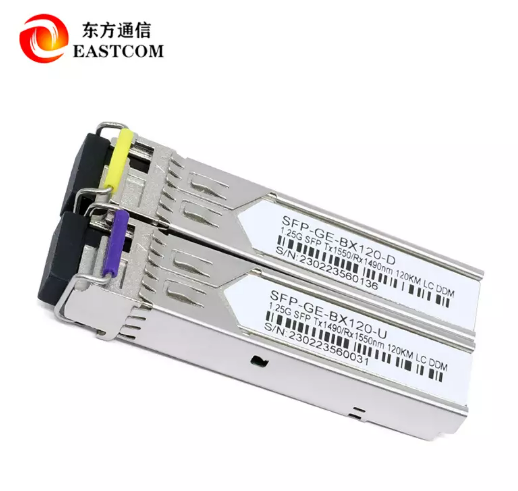
Digital optical modules are the backbone of many modern communication systems. Their ability to convert electrical signals to optical signals and back enables fast, reliable data transfer across various industries. Let’s explore some key real-world applications.
In telecommunications, digital optical modules connect long-distance fiber optic networks. They support high-capacity data transmission between cities and countries, making global communication possible. Telecom providers rely on these modules to maintain signal quality over vast distances, often using modules with advanced features like automatic power control and error detection.
Data centers also heavily depend on digital optical modules. These facilities handle massive amounts of data traffic daily, requiring fast and efficient connections between servers, switches, and storage devices. Modules like SFP+ and QSFP are common here, enabling speeds from 10 Gbps up to 400 Gbps. Hot-swappable modules reduce downtime, allowing data centers to upgrade or replace parts without interrupting services.
Within enterprise networks, digital optical modules provide flexible connectivity options. Businesses use them to link switches and routers across office floors or buildings. Modules support various protocols such as Ethernet and Fibre Channel, catering to different networking needs. Their small form factors make them easy to install in dense networking equipment, optimizing space.
In addition, these modules support both single-mode and multi-mode fiber connections, allowing networks to balance distance and cost. For example, multi-mode fiber with SFP modules suits short distances inside buildings, while single-mode fiber with SFP+ or XFP modules works for longer links.
Digital optical modules excel in high-speed data transmission over long distances. Technologies like 100 Gigabit Ethernet or beyond rely on QSFP28 or similar modules to achieve required speeds. These modules often use advanced lasers and sensitive receivers to maintain signal integrity over tens of kilometers.
Long-haul telecommunications networks use modules with Distributed Feedback (DFB) lasers and Avalanche Photodiode (APD) receivers to extend reach and improve sensitivity. This combination ensures data arrives accurately despite signal loss during transmission.
High-frequency trading firms and cloud service providers also benefit from these modules, where milliseconds matter. The low latency and high throughput of digital optical modules help maintain competitive advantages in such environments.
When deploying digital optical modules in real-world networks, several challenges can impact their performance and longevity. Understanding these issues helps network professionals make informed decisions, maintain high-quality systems, and avoid costly disruptions.
One of the primary challenges involves maintaining signal integrity during transmission. Fiber optic signals can degrade due to noise, attenuation, or interference, especially over long distances. Signal conditioning techniques are essential to mitigate these issues. This includes amplifying weak signals, filtering out noise, and equalizing signal levels to ensure data is transmitted accurately.
Error detection mechanisms, such as Cyclic Redundancy Checks (CRC), are embedded within modules to identify corrupted data. When errors are detected, modules can initiate retransmission or alert administrators, ensuring data reliability. However, excessive error rates can still occur if modules are not properly calibrated or if environmental conditions deteriorate.
Continuous monitoring of digital optical modules is crucial for early detection of potential failures. Many modules now support Digital Optical Monitoring (DOM), providing real-time data on parameters like optical power, temperature, and voltage levels. This data helps identify issues such as optical power loss, overheating, or voltage irregularities before they cause system failures.
Maintenance involves regular inspection, cleaning fiber connectors, and updating firmware. Dust, dirt, or physical damage to connectors can significantly impair signal quality. Additionally, aging components like lasers or photodiodes may lose efficiency over time, necessitating replacement.
Proactive monitoring reduces downtime and extends the lifespan of modules. It also allows for predictive maintenance, where issues are addressed before they escalate into failures.
Selecting the correct digital optical module is not always straightforward. Compatibility with existing hardware, required data rates, transmission distance, and environmental conditions all influence the decision.
For example, a data center needing high-speed, short-distance links might choose SFP+ modules supporting 10 Gbps over multimode fiber. Conversely, long-haul telecom networks might prefer modules with single-mode fiber, DFB lasers, and APD receivers for extended reach.
Environmental factors also matter. Harsh conditions, like extreme temperatures or vibrations, require modules with rugged designs and wide temperature ranges. Power consumption is another consideration; energy-efficient modules help reduce operational costs.
Manufacturers may differ in features such as built-in error correction, DOM capabilities, or compatibility with various protocols. Carefully reviewing specifications and consulting vendor support ensures the chosen modules meet specific network requirements.
● Compatibility: Always verify that modules match your device’s interface and form factor.
● Standards Compliance: Ensure modules comply with industry standards like IEEE, MSA, or ITU to guarantee interoperability.
● Vendor Support: Reliable technical support and firmware updates can prolong device lifespan.
● Cost vs. Performance: Balance budget constraints with performance needs. Sometimes, investing in higher-quality modules reduces maintenance costs over time.
By addressing these challenges thoughtfully, network administrators can optimize performance, enhance reliability, and extend the lifespan of their optical communication infrastructure. Proper planning and ongoing management are key to harnessing the full potential of digital optical modules in modern networks.
Digital optical modules keep evolving rapidly, driven by the need for faster, more reliable communication. Recent innovations focus on increasing data rates while reducing power consumption and size. For example, modules now support speeds beyond 400 Gbps, using advanced modulation techniques like PAM4 (Pulse Amplitude Modulation) to pack more data into each light pulse.
Integration of silicon photonics is another breakthrough. This technology uses silicon chips to perform optical functions, allowing smaller, cheaper, and more energy-efficient modules. Silicon photonics also enables better heat dissipation and mass production, making high-speed modules more accessible.
Artificial intelligence and machine learning are emerging in module control circuits. These smart algorithms optimize signal quality, predict failures, and adjust parameters dynamically, improving network reliability and reducing maintenance costs.
Digital optical modules play a pivotal role in expanding global networks. As internet traffic grows exponentially, these modules support backbone infrastructure connecting continents via undersea cables and terrestrial fiber. Their ability to handle ultra-high speeds and long distances keeps data flowing smoothly across vast networks.
They also enable cloud computing and 5G networks by providing fast, low-latency links between data centers and edge devices. This connectivity supports real-time applications like video streaming, online gaming, and IoT devices worldwide.
Moreover, digital optical modules help bridge the digital divide by making high-speed internet more affordable and available in remote areas. Advances in module technology lower costs and improve compatibility, encouraging network expansion in developing regions.
Looking ahead, we expect digital optical modules to become even smaller and more integrated. Multi-protocol modules that support various standards simultaneously will simplify network upgrades and reduce inventory needs.
The push for greener technology will drive modules to consume less power and use eco-friendly materials. Modules with enhanced Digital Optical Monitoring (DOM) and predictive analytics will become standard, helping networks self-optimize and self-heal.
Quantum communication may influence future module design, requiring new components to handle quantum signals securely over fiber. While still experimental, this could revolutionize data security.
In summary, digital optical modules will continue to be the backbone of modern communication, adapting to new demands and technologies to keep the world connected.
Digital optical modules convert electrical signals to optical signals and back, enabling efficient data transmission over fiber optic networks. These modules are crucial for high-speed, long-distance communication in data centers and telecommunications. They support various protocols and data rates, ensuring seamless integration into diverse network environments. As technology advances, these modules will continue to evolve, meeting growing demands. EASTCOM offers innovative digital optical modules that enhance network performance, providing reliable and fast communication solutions for modern networking needs.
A: An optical module, such as a fiber optic SFP module, converts electrical signals into optical signals and vice versa, enabling data transmission over fiber optic cables.
A: Fiber optic SFP modules convert electrical signals into optical signals using a transmitter and convert them back into electrical signals with a receiver, facilitating efficient data transfer.
A: Digital optical modules are crucial for high-speed, long-distance communication, supporting various protocols and data rates, and ensuring reliable data transmission in modern networks.


