
11th Floor, Chuangbo Industrial Park, 177 Tianchen Road, High-tech Zone, Jinan City, Shandong Province, China
Views: 0 Author: Site Editor Publish Time: 2025-11-11 Origin: Site


Have you ever wondered how high-speed data travels across continents in a blink? Optical modulators play a crucial role in this magic. These devices, including the sfp optical module, transform light signals for efficient communication. In this post, you'll learn about optical modulators' functions and their impact on modern photonics.
Optical modulation is the process of controlling certain properties of light—like amplitude, phase, frequency, or polarization—using specific materials or devices. Think of it as turning a light signal into a "digital switch" or "dimmer" for light. This control allows us to encode information onto light beams, which is essential in high-speed communication systems, sensors, and other optical technologies.
The core idea involves passing light through a material that responds to an electrical or acoustic signal. When an electrical signal is applied, the material's optical properties change, altering the light that passes through it. This change can be in the light's brightness (amplitude), its wave phase, or how the light wave oscillates (polarization). The resulting modulated light carries data or performs specific functions in various applications.
There are several main types of optical modulators, each suited for different tasks and based on different physical effects:
● Electro-Optic Modulators: These use electric fields to change the refractive index of a crystal, thus modulating light's phase or amplitude. Lithium niobate (LiNbO₃) is a common material here. They are known for high speed and precision, ideal for telecommunications and laser systems.
● Acousto-Optic Modulators (AOMs): These devices leverage sound waves inside a crystal to manipulate light. By controlling the sound wave's frequency and amplitude, they can deflect, shift, or modulate light intensity rapidly. They are often used in laser switching, spectroscopy, and optical communication.
● Thermo-Optic Modulators: These rely on temperature changes to alter a material's refractive index. When heated or cooled, the light passing through experiences a phase shift or attenuation. They are suitable for applications where slower modulation speeds are acceptable, such as in certain sensing or stabilization systems.
Each type offers unique advantages. Electro-optic modulators excel at high-speed data transmission, acousto-optic devices provide flexible beam steering, and thermo-optic options are simple and cost-effective for less demanding tasks.
In a typical setup, light enters the modulator device. An electrical or acoustic signal is applied, prompting the material to respond. This response modifies the light's properties—say, changing its phase or intensity. The modulated light then exits the device, ready for transmission or further processing.
For example, in an electro-optic phase modulator, an electric voltage creates a change in the crystal's refractive index. This change shifts the phase of the light passing through, encoding information onto the wave's oscillation. In acousto-optic modulators, sound waves inside the crystal deflect or frequency-shift the light beam, enabling precise control over the beam's direction or color.
Feedback mechanisms are often integrated. Sensors monitor the output light, and control systems adjust the input signals to maintain optimal modulation quality. This ensures high fidelity in data transmission, precise measurements, or laser control.
● Telecommunications: Modulators encode data onto light signals in fiber optics, enabling the internet, streaming, and global communications.
● Sensing: They detect tiny changes in environment or biological systems by observing how light properties shift in response to external stimuli.
● Laser Systems: Modulators control laser pulses for manufacturing, medical procedures, or scientific research.
Understanding these basic principles helps in designing better optical systems, improving data speeds, and developing innovative applications across industries.
Electro-optic modulators use electric fields to change how light behaves inside a crystal. When a voltage is applied, the crystal's refractive index shifts, affecting the light passing through it. This effect is called the electro-optic effect. It allows precise control of light's phase, amplitude, or polarization.
One common type is the phase modulator. It works by applying a voltage along one of the crystal's axes, changing the optical path length. The amount of phase shift depends on the voltage and the crystal's properties. The key measure here is the half-wave voltage, Vπ, which is the voltage needed to produce a 180° phase shift. For example, lithium niobate (LiNbO₃) crystals are popular because of their high electro-optic coefficients.
Amplitude modulators, on the other hand, use the electro-optic effect to rotate the polarization of light. They are typically built with a crystal between two polarizers. When no voltage is applied, the light passes through with minimal change. Applying a voltage alters the polarization, causing the light to be blocked or transmitted, depending on the setup. These devices are often biased at 50% transmission to allow small, linear changes in amplitude.
Electro-optic modulators are highly versatile. They can operate at very high speeds—up to tens of gigahertz—making them essential in fiber-optic communications, laser systems, and scientific research. They are also used in laser mode-locking, which produces ultrashort pulses of light.
Acousto-optic modulators (AOMs) use sound waves inside a crystal to control light. When an electrical signal drives a piezoelectric transducer, it generates sound waves in the crystal. These waves create periodic density changes, which affect how light propagates through the material.
AOMs can do several things:
● Modulate intensity: By changing the sound wave's amplitude, they turn the light on and off quickly.
● Steer beams: Adjusting the sound wave's frequency and direction deflects the light beam. This is useful in laser scanning or beam alignment.
● Shift frequency: The sound waves can change the light's frequency, which helps in spectroscopy or Doppler measurements.
They are used in many fields:
● Lasers: For Q-switching, AOMs act as fast shutters, producing high-power pulses. They also assist in mode-locking lasers for ultrashort pulses.
● Telecommunications: They encode data onto light by modulating intensity or shaping pulses, improving data transfer over fiber optics.
● Spectroscopy: Tunable filters and Doppler velocimetry rely on AOMs to analyze chemical compositions or measure object speeds.
● Material processing: Precise laser beam steering helps in cutting, engraving, or microfabrication.
AOMs are valued for their speed and flexibility. They can operate at frequencies from a few kilohertz to several gigahertz. Their main advantage: rapid, accurate control of light without physically moving parts.
Thermo-optic modulators change light properties by heating or cooling the material. When temperature shifts, the refractive index of the material changes slightly. This alters the phase or intensity of the light passing through.
These devices are simple and cost-effective. They are suitable for applications where speed isn’t critical, like in stabilization or slow modulation systems. For example, they can stabilize laser frequencies or control signals in sensors.
However, they are slower than electro-optic or acousto-optic modulators. The response time depends on how quickly the temperature can be changed. They also tend to consume more power due to heating.
Thermo-optic modulators find use in optical switches, sensors, and certain laser systems. They are especially useful when high-speed modulation isn't necessary, but stability and reliability are important.
An optical modulator begins its job when light enters the device. This light usually comes from a laser or another optical source. Inside the modulator, the light passes through a special material designed to respond to external signals.
At the same time, an electrical signal is applied to the modulator. This signal can be a voltage or current that changes over time to carry information. The electrical input interacts with the modulator's material, triggering changes in its optical properties. For example, in electro-optic modulators, the electric field alters the refractive index of the crystal inside, affecting how light travels through it.
This interaction is precise and fast. The modulator converts the electrical signal into changes in the light wave, effectively encoding data or control signals onto the light beam.
The key to modulation lies in the material's response. Different materials react to electrical signals in unique ways, changing light properties such as phase, amplitude, or polarization.
● Electro-Optic Effect: In crystals like lithium niobate, applying an electric field changes the refractive index slightly. This shifts the phase of the light passing through. For example, a phase modulator changes the optical path length, encoding information by altering the light wave's phase.
● Acousto-Optic Effect: Here, sound waves generated by an electrical signal create periodic density changes inside the material. These changes act like a moving diffraction grating, deflecting or modulating the light beam's intensity or frequency.
● Thermo-Optic Effect: Heating the material changes its refractive index. This effect is slower but useful for applications needing gradual modulation or stabilization.
The material's response is carefully designed to match the desired modulation speed and depth. For instance, electro-optic modulators can operate at gigahertz frequencies, enabling high-speed data transmission.
After modulation, the light exits the device carrying the encoded information. This modulated light beam can then be sent through optical fibers, sensors, or other systems for further use.
Many optical modulators include feedback mechanisms to maintain optimal performance. Sensors monitor the output light's quality, such as intensity or phase stability. Control systems adjust the electrical input based on this feedback, compensating for temperature changes or device aging.
This closed-loop control ensures consistent modulation quality, essential for applications like telecommunications where signal integrity is critical.
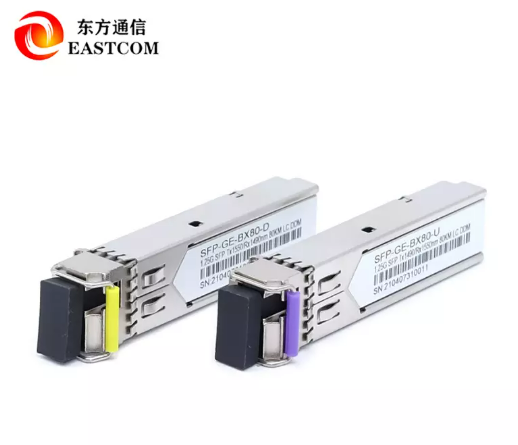
Optical modulators play a crucial role in many industries by controlling light signals for various purposes. Their ability to quickly and precisely change light's properties makes them essential in telecommunications, sensing, and defense. Let's explore some key applications.
In telecommunications, optical modulators encode data onto light signals traveling through fiber optic cables. They enable high-speed internet, phone calls, and streaming by rapidly modulating light's amplitude or phase to represent digital information. Unlike direct modulation of lasers, external modulators preserve signal quality and laser stability, improving transmission over long distances.
Data centers also rely on optical modulators to handle massive data flows between servers. These modulators reduce latency and increase bandwidth, supporting cloud computing and large-scale data processing. High-speed electro-optic modulators, often made from lithium niobate crystals, are common here due to their fast response and low signal distortion.
Optical modulators enhance sensing technologies by detecting subtle changes in light caused by environmental factors. For example, in biomedical sensing, modulators help measure biological markers by modulating light that interacts with tissues or fluids. Changes in the modulated light reveal important information about the sample.
In environmental monitoring, modulators assist in detecting chemical compositions or temperature variations. They modulate light in interferometers or spectrometers, improving measurement accuracy. Amplitude modulators can stabilize laser intensity, while phase modulators help lock laser frequencies, ensuring precise and reliable sensing.
The defense and aerospace sectors use optical modulators for secure, rapid communication and advanced sensing. Modulators encode encrypted data onto light signals, enabling safe transmissions resistant to interception. High-performance modulators support laser-based systems such as LIDAR for navigation and obstacle detection.
In aerospace, modulators control laser pulses used in range finding and target tracking. Acousto-optic modulators steer laser beams quickly and precisely, essential for adaptive optics and imaging. Their speed and reliability make them valuable in harsh environments where accuracy is vital.
Optical modulators rely heavily on the materials inside them. Crystalline materials like lithium niobate (LiNbO₃) and potassium titanyl phosphate (KTP) are common. These crystals have strong electro-optic effects, meaning their refractive index changes quickly when an electric field is applied. This property allows fast and precise modulation of light signals. Lithium niobate is popular because it offers a wide transparency window and good electrical properties. It also resists moisture, so devices last longer without special sealing.
Polymeric materials are another option. These are plastics designed to have electro-optic properties. They are often easier and cheaper to produce than crystals. Polymers can be flexible and lightweight, making them suitable for integrated photonics or applications needing compact setups. However, polymers usually have lower modulation speeds and can be less stable under heat or long-term use.
To get the best of both worlds, hybrid materials combine crystals and polymers or other substances. These hybrids aim to improve performance by mixing high speed, low power consumption, and easy integration. For example, a hybrid modulator might use a crystalline core for fast modulation and a polymer cladding for flexibility or better coupling with optical fibers.
Hybrid materials also open doors for new device designs. They can be engineered to reduce losses, increase bandwidth, or operate over a wider range of wavelengths. This versatility is key in developing next-generation modulators for telecom, data centers, and sensing.
The choice of material directly affects modulator performance. Crystals like lithium niobate offer high-speed modulation up to tens of gigahertz, which is essential for fast data transmission. They also handle high optical power well but can be bulky and costly.
Polymers, while less robust, allow easier fabrication and integration into silicon photonics platforms. This helps in miniaturizing devices and cutting costs but may sacrifice speed and power handling.
Hybrid materials try to balance these trade-offs, enhancing efficiency and expanding application possibilities. Material stability also matters—some crystals can suffer from photorefractive damage at high intensities, while polymers may degrade under heat.
In summary, selecting the right material depends on your application needs: speed, power, size, cost, and environmental conditions. Advances in material science continue to push optical modulators toward higher performance and broader use.
Optical modulators often operate at very high frequencies—sometimes tens of gigahertz. At these speeds, the materials inside modulators face stress. For example, lithium niobate crystals, common in electro-optic modulators, must maintain stable refractive indices despite rapid electric field changes. If the material’s structure fluctuates or heats unevenly, modulation quality drops. This instability leads to signal distortion or increased noise.
Thermal effects also play a role. High-speed operation can cause localized heating, changing material properties temporarily. This thermal drift affects modulation depth and phase accuracy. Engineers must carefully manage heat dissipation and select materials with good thermal conductivity or design modulators with temperature compensation.
Photorefractive damage happens when intense light alters a crystal’s refractive index permanently or semi-permanently. Lithium niobate, for example, is prone to this effect under high optical power or certain wavelengths. This damage scatters light inside the crystal, degrading the modulator’s performance by distorting the beam or reducing modulation efficiency.
To reduce this risk, manufacturers use doped crystals, like magnesium-oxide-doped lithium niobate. These modified crystals resist photorefractive damage better, allowing higher power handling. Still, users must keep optical intensity below specified limits and avoid wavelengths that trigger damage easily.
Many electro-optic materials are also piezoelectric, meaning they generate mechanical vibrations when electric fields apply. These vibrations induce strain inside the crystal, changing its refractive index through the elasto-optic effect. The result can be unwanted amplitude modulation or beam displacement at the modulation frequency.
This side effect is most noticeable near mechanical resonance frequencies, typically between 1 and 10 MHz. If the modulator’s drive signal matches these frequencies, vibrations amplify, causing noise or instability. Manufacturers avoid tuning modulators near these resonances. Proper mechanical design and damping help minimize piezoelectric-induced disturbances.
Hybrid materials are shaping the future of optical modulators. By combining crystalline substances like lithium niobate with polymers or other materials, these hybrids offer a balance of speed, flexibility, and cost-effectiveness. Crystals provide fast modulation and high power handling, while polymers add lightweight and easy integration features.
Researchers are developing new hybrid designs to reduce losses and increase bandwidth. For example, integrating thin-film lithium niobate on silicon or polymer layers can create modulators with faster response times and smaller footprints. These materials also allow modulation over broader wavelength ranges, making devices more versatile.
This progress means modulators can be tailored for specific needs, such as ultra-high-speed data communications or compact sensors. Hybrid materials also open doors for flexible or wearable photonic devices, expanding optical modulation beyond traditional settings.
Silicon photonics is a major trend driving optical modulator innovation. Silicon chips can integrate modulators, detectors, and other components on a single platform, reducing size and cost. Hybrid materials play a key role here, as pure silicon lacks strong electro-optic effects needed for efficient modulation.
By bonding or layering electro-optic crystals or polymers onto silicon waveguides, manufacturers create modulators compatible with existing semiconductor processes. This integration enables mass production and easier system assembly.
Such modulators support data center applications where space and power efficiency matter. They also improve performance in emerging fields like quantum computing and on-chip optical interconnects. Silicon photonics combined with advanced modulators promises faster, smaller, and more affordable optical systems.
New applications are driving innovation in optical modulators. For example:
● Quantum Technologies: Modulators control single photons for quantum communication and computing. Precise phase and amplitude control is vital here.
● LIDAR and Autonomous Vehicles: Fast, reliable modulators improve laser scanning resolution and speed, enhancing navigation and object detection.
● Augmented Reality (AR) and Virtual Reality (VR): Compact modulators enable dynamic light control in headsets, improving image quality and reducing power use.
● Biomedical Imaging: High-speed modulators enhance techniques like optical coherence tomography, allowing better tissue imaging.
Innovations also include modulators with lower drive voltages, higher temperature stability, and wider operational bandwidths. Researchers explore new materials such as 2D crystals and organic compounds to push performance further.
Optical modulators control light properties to encode information, crucial for telecommunications and sensing. They use materials like lithium niobate for speed and precision. Hybrid materials and silicon photonics integration are future trends, enhancing performance and versatility. EASTCOM's products leverage these advancements, offering high-speed, reliable modulators for diverse applications.
A: An optical module, such as an SFP optical module, is a device used in telecommunications to transmit data over optical fibers. An optical modulator within the module encodes data onto light signals for high-speed communication.
A: An SFP optical module uses optical modulation to convert electrical signals into optical signals, enabling data transmission over fiber optic cables with minimal loss and high speed.
A: Optical modulators in SFP optical modules are crucial for encoding data onto light signals, ensuring efficient, high-speed data transmission in telecommunications and data center networks.


