
11th Floor, Chuangbo Industrial Park, 177 Tianchen Road, High-tech Zone, Jinan City, Shandong Province, China
Views: 0 Author: Site Editor Publish Time: 2025-11-10 Origin: Site


Have you ever wondered how data travels as light through fiber optic cables? Optical modules are the secret. They convert electrical signals into optical ones, enabling high-speed communication. In this post, you'll learn about their internal components and their role in fiber optic networks.
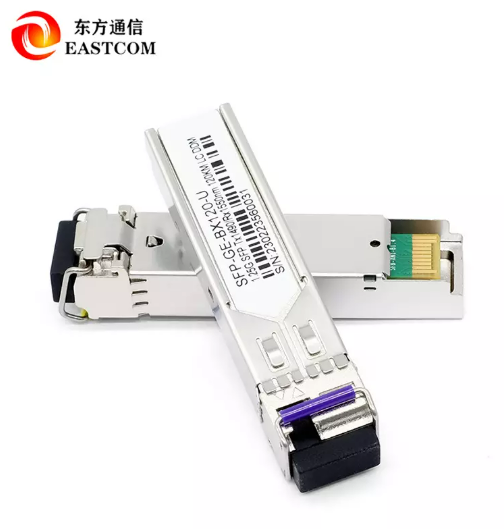
Optical modules are devices that convert electrical signals into optical signals and vice versa. This conversion is essential for fiber optic communication, where data travels as light pulses through optical fibers. The module acts as a bridge between electronic devices and the optical network.
At its core, an optical module performs electro-optical conversion. On the transmitting side, it changes electrical signals into light signals using a light source like a laser diode. On the receiving side, it converts incoming light signals back into electrical signals using photodetectors. This two-way conversion allows data to flow efficiently across long distances at high speeds.
The process begins when the module receives an electrical signal from a device such as a switch or router. The transmitter section inside the module converts this electrical signal into an optical one. This optical signal then travels through the fiber optic cable. At the receiving end, the module captures the light signal and converts it back into an electrical signal for the connected device to process.
Electro-optical conversion involves several delicate components working together:
● Light Source: Usually a laser diode or LED that emits light representing the data.
● Photodetector: Converts the received light back into an electrical signal.
● Optical Interfaces: Ensure efficient coupling between the module and the fiber.
● Control Circuits: Manage signal quality, temperature, and power levels.
This conversion process enables optical modules to support high data rates and long-distance communication with minimal loss and interference. Understanding how these modules function is key to grasping the fundamentals of modern fiber optic networks.
An optical module is made up of several key internal components that work together to enable high-speed, reliable data transmission over fiber optic networks. Understanding these core components helps clarify how optical modules perform their vital role in modern communication systems.
TOSA is responsible for converting electrical signals into optical signals for transmission. It contains the laser diode, which acts as the light source, and other essential parts like the monitor photodiode, optical interface, and housing. The laser diode can be of two main types:
● Edge Emitter Laser (EEL): Emits light at wavelengths of 1310nm or 1550nm, suitable for long-distance, high-speed links.
● Vertical Cavity Surface Emitting Laser (VCSEL): Emits at 850nm, typically used for shorter-range, lower-speed applications.
The TOSA's design varies depending on the application, with packaging options like TO-CAN, Gold-BOX, or chip-on-chip (COC). It often includes a coupling lens to focus light into the fiber and an isolator to prevent reflected light from damaging the laser.
ROSA handles the reception of optical signals. It converts incoming light back into electrical signals using a photodiode, such as PIN or avalanche photodiode (APD). The ROSA includes:
● Photodiode: Detects the incoming optical signal.
● Optical Interface: Guides light onto the photodiode.
● Electrical Interface: Connects to the module's circuitry.
In some modules, ROSA may incorporate amplifiers to boost weak signals. These can be preamplifiers, which convert current to voltage and amplify it, or post-amplifiers, which prepare the signal for digital processing.
BOSA is used in bidirectional transceivers, supporting two-way communication over a single fiber. It combines the functions of TOSA and ROSA, integrating wavelength division multiplexing (WDM) filters. This allows different wavelengths for transmit and receive signals within the same fiber, reducing infrastructure costs and simplifying network design.
Besides the main optical sub-assemblies, several supporting components ensure optimal operation:
● LDD (Laser Diode Driver): Supplies current to the laser diode, controlling its output power.
● CDR (Clock and Data Recovery): Extracts timing information from received signals, ensuring data integrity.
● TIA (Trans-Impedance Amplifier): Converts the photodiode's current signal into a voltage.
● LA (Limiting Amplifier): Stabilizes signal amplitude for consistent processing.
● MCU (Micro-Controller Unit): Monitors parameters like temperature, voltage, and optical power, aiding in maintenance and diagnostics.
The physical design protects internal components and ensures reliable operation:
● Connector and Housing: Provides mechanical connection points and environmental protection.
● Heat Dissipation Elements: Such as heatsinks, maintain stable temperatures.
● Monitoring Interfaces: Allow external devices to read performance data and control module functions.
The Transmitter Optical Sub-Assembly, or TOSA, is the heart of the transmitting side in an optical module. Its main job is to turn electrical signals into optical signals, which then travel through fiber optic cables to reach the receiver.
At the core of TOSA lies the laser diode, the light source that generates the optical signal. Alongside the laser diode, TOSA includes:
● Monitor Photodiode (MPD): This small sensor keeps an eye on the laser’s output power, ensuring it stays stable.
● Optical Interface: Often a lens system that focuses the light beam into the fiber.
● Housing: Protects the delicate internal parts, usually made of metal or plastic.
● Electrical Interface: Connects the laser diode to the module’s circuitry.
Some TOSAs also include additional parts like isolators to prevent reflected light from damaging the laser and thermoelectric coolers (TEC) to maintain a stable temperature for optimal performance.
Two main types of lasers are used in TOSA:
● Edge Emitting Laser (EEL): Emits light from the edge of the semiconductor chip, typically at wavelengths of 1310nm or 1550nm. These lasers suit long-distance, high-speed applications because they offer higher output power and better coupling efficiency.
● Vertical Cavity Surface Emitting Laser (VCSEL): Emits light vertically from the surface of the chip, usually around 850nm. VCSELs are common in short-range, lower-speed networks, such as within data centers, due to their lower cost and simpler packaging.
TOSA packaging varies to meet different needs:
● TO-CAN: A traditional metal can package providing good protection and heat dissipation.
● Gold-BOX: Offers enhanced shielding and is often used in higher-performance modules.
● Chip-on-Chip (COC): Integrates laser and driver chips closely, reducing size and improving performance.
● Chip-on-Board (COB): Mounts chips directly onto the circuit board, saving space and cost.
In data centers, some TOSAs omit components like TEC and isolators to reduce cost since the environment is controlled and distances are shorter.
The Receiver Optical Sub-Assembly, or ROSA, plays a crucial role in an optical module. Its main job is to convert incoming light signals back into electrical signals for the device to process. This conversion is essential for receiving data in fiber optic communication.
ROSA mainly consists of:
● Photodiode: The core sensor that detects light. It converts the optical signal into an electrical current.
● Optical Interface: Guides the incoming light efficiently onto the photodiode. This may include lenses or filters.
● Electrical Interface: Connects the photodiode output to the module’s internal circuitry.
Beyond these, ROSA may include amplifiers to strengthen weak signals. Two common types are:
● Preamplifiers: Convert the small current from the photodiode into a voltage and amplify it.
● Post-amplifiers: Further boost the signal and prepare it for digital processing.
These components ensure the electrical signal is strong and clean enough for accurate data recovery.
Two main photodetectors appear in ROSA:
● PIN Photodiode: Common in short to medium-range modules. It offers fast response and moderate sensitivity.
● Avalanche Photodiode (APD): Used for long-range, high-sensitivity applications. APDs amplify the signal internally, making them suitable for detecting very weak light signals.
Choice between PIN and APD depends on the transmission distance and system requirements.
● Short to Medium Range: ROSA with PIN photodiodes finds use in data centers, local area networks (LANs), and metro networks. These environments require moderate sensitivity and cost-effectiveness.
● Long Range: ROSA with APD suits long-haul telecommunications and metropolitan area networks (MANs). Its higher sensitivity helps maintain signal quality over extended distances.
For example, a 10G SFP+ module for data centers typically uses a PIN photodiode, while a 10G ER or ZR module for long distances often integrates an APD.
Understanding Bidirectional Optical Sub-Assembly (BOSA) is key to grasping modern optical communication systems. BOSA is a specialized component designed for bidirectional transceivers, which can send and receive data over a single fiber. This capability is a game-changer in network design, offering greater efficiency and reduced costs.
Traditional fiber optic modules use separate components—TOSA (Transmitter Optical Sub-Assembly) and ROSA (Receiver Optical Sub-Assembly)—to handle one-way data flow. TOSA converts electrical signals into light for transmission, while ROSA does the reverse, converting incoming light back into electrical signals. These components are typically connected to different fibers, enabling unidirectional communication.
BOSA combines these functions into a single module, allowing both transmitting and receiving over one fiber. It uses a Wavelength Division Multiplexing (WDM) filter to split the wavelengths. One wavelength is dedicated to transmission, the other to reception. This setup effectively makes the fiber a two-way street for data, simplifying infrastructure.
WDM technology is the backbone of BOSA's functionality. It assigns different wavelengths to transmit and receive signals within the same fiber. For example, the BOSA might use 1310nm wavelength for transmitting and 1550nm for receiving. The WDM filter inside the BOSA separates these signals, preventing crosstalk.
This integration allows network engineers to deploy fewer fibers, saving space and reducing costs. It also simplifies installation and maintenance because one module handles both directions. BOSA's design ensures minimal signal loss and crosstalk, maintaining high data integrity.
Using BOSA enhances network efficiency in several ways:
● Reduced Infrastructure Costs: Fewer fibers needed, lowering material and installation expenses.
● Compact Design: Smaller modules save space in data centers and network cabinets.
● Simplified Management: Easier to upgrade and troubleshoot since fewer components are involved.
● Enhanced Flexibility: Supports various network configurations, including long-haul and metro networks.
Imagine a data center that needs to connect multiple servers. Using BOSA modules, they can run a single fiber between switches, transmitting and receiving data simultaneously. This setup reduces cabling clutter and cuts costs significantly.
Similarly, telecom providers use BOSA in metro networks to deliver high-speed internet to urban areas. The bidirectional approach allows for faster deployment and easier upgrades.
In addition to the primary optical sub-assemblies like TOSA, ROSA, and BOSA, several internal components are crucial for the optimal performance of optical modules. These components help regulate, amplify, and monitor signals, ensuring data integrity and device reliability.
LDD is vital for controlling the laser diode's operation. It supplies precise current to the laser, converting signals from the Clock and Data Recovery (CDR) circuit into modulation signals that drive the laser. Different laser types, such as those in short-range modules, require specific LDD chips to match their electrical characteristics. Proper LDD selection impacts the laser's output power stability and overall module performance.
CDR plays a key role in high-speed optical modules. It extracts timing information from incoming signals, ensuring data is accurately recovered. CDR also stabilizes the signal by aligning received data with the transmitted clock. Modules like 10G SFP+ ER or ZR heavily rely on CDR to maintain high data integrity over long distances. It essentially makes sure the received data matches what was sent, despite transmission noise or timing variations.
TIA is located at the front of the photodetector in the optical module. Its job is to convert the tiny current generated by the photodiode into a usable voltage signal. Because the current from the photodiode can be very weak, TIA amplifies it, making the signal strong enough for further processing. Without TIA, the electrical signals would be too faint to interpret accurately, especially in long-distance communications.
The output from TIA varies with the optical power received. LA standardizes this by converting fluctuating signals into a consistent, stable voltage. It ensures the subsequent circuits, like the CDR, receive signals of uniform amplitude. In high-speed modules, LA often integrates with TIA or CDR, streamlining the signal processing chain and improving overall reliability.
MCU acts as the brain of the optical module. It runs software that monitors key parameters like temperature, supply voltage, bias current, and optical power. This real-time data helps detect issues early, facilitating maintenance and troubleshooting. The MCU also manages functions like Digital Diagnostic Monitoring (DDM), which provides valuable insights into the module's health, ensuring stable network operation.
The mechanical design and packaging of an optical module are crucial for protecting its delicate internal components and ensuring reliable, long-lasting performance. These aspects also help maintain signal quality and module stability under various operating conditions.
The connector serves as the physical interface between the optical module and the external fiber optic cable. It must provide precise alignment to couple light efficiently between the module and fiber. Common connector types include LC, SC, and MPO, chosen based on application and fiber type.
The protective housing encloses all internal parts, shielding them from dust, moisture, mechanical shocks, and electromagnetic interference. Typically made from metal or high-grade plastic, the housing also provides structural support, ensuring the module fits securely into network devices like switches or routers.
Optical modules generate heat during operation, especially those using laser diodes and amplifiers. Excess heat can degrade performance or damage components. To combat this, modules include heat dissipation features such as:
● Heatsinks: Metal fins or plates attached to the housing to increase surface area for heat release.
● Thermoelectric Coolers (TEC): Devices that actively regulate temperature by pumping heat away from sensitive components like laser diodes.
● Thermal Interface Materials: Compounds that improve heat transfer between components and heatsinks.
Maintaining stable temperatures ensures consistent optical output power and signal integrity, preventing drift or failure.
Modern optical modules often integrate monitoring circuits that track key parameters:
● Temperature
● Supply Voltage
● Laser Bias Current
● Transmitted and Received Optical Power
This data is accessible through digital diagnostic monitoring (DDM) or digital optical monitoring (DOM) interfaces. These interfaces allow network administrators to remotely check module health, enabling proactive maintenance and quick troubleshooting.
Additionally, interface circuits provide electrical connections between the optical components and the host system. They handle signal conditioning, power management, and communication protocols required for module control and data exchange.
Optical modules are crucial for converting electrical signals into optical ones for fiber optic communication. Key components include TOSA, ROSA, and BOSA, which handle transmission, reception, and bidirectional communication. Understanding these components ensures efficient data flow and network performance. As technology advances, optical modules will continue to evolve, offering faster speeds and greater efficiency. Companies like EASTCOM provide innovative solutions, enhancing network reliability and performance. Their products offer unique benefits, supporting high-speed data transmission and robust network infrastructure.
A: An optical module is a device that converts electrical signals into optical signals and vice versa, facilitating data transmission over fiber optic networks.
A: An optical module works by using a light source to convert electrical signals to optical signals for transmission and a photodetector to convert received optical signals back into electrical signals.
A: Optical modules are crucial because they enable high-speed, long-distance data transmission with minimal loss, essential for modern fiber optic networks.
A: The main components include the Transmitter Optical Sub-Assembly (TOSA), Receiver Optical Sub-Assembly (ROSA), and Bidirectional Optical Sub-Assembly (BOSA).
A: TOSA converts electrical signals to optical for transmission, while ROSA converts received optical signals back into electrical signals for processing.


