
11th Floor, Chuangbo Industrial Park, 177 Tianchen Road, High-tech Zone, Jinan City, Shandong Province, China
Views: 0 Author: Site Editor Publish Time: 2025-12-10 Origin: Site


In today’s rapidly evolving digital world, the need for high-speed, stable, and reliable data transmission has never been greater. Whether you are operating a data center, an industrial automation system, or a telecommunications network, the quality and efficiency of your network's communication equipment play a pivotal role in ensuring seamless operations. One such critical component in modern networking infrastructure is the fiber optic transceiver. As an essential device in the fiber optic network, it facilitates high-performance data transmission over long distances with minimal loss and interference. This article will guide you through the function, importance, and various applications of the fiber optic transceiver, helping you determine why your network could benefit from integrating this technology.
A fiber optic transceiver is a compact module that combines both the transmitter and receiver of optical signals into one unit. Its primary function is to enable the conversion of electrical signals into optical signals for transmission over fiber optic cables, and then reverse the process at the receiving end. The fiber optic transceiver typically operates by utilizing laser diodes for signal transmission and photodiodes for reception. This seamless process ensures that data can be sent and received at very high speeds and over great distances, which is essential for many modern communication networks.
The module’s integration of both functions into a single unit offers significant advantages in terms of cost, efficiency, and space-saving, especially in large-scale network infrastructures like data centers, telecommunications, and industrial applications. Additionally, the fiber optic transceiver is designed to be hot-swappable, meaning it can be replaced or upgraded without interrupting the network. This flexibility makes it an ideal solution for dynamic network environments where downtime can be costly.
Understanding the fiber optic transceiver's operation requires a breakdown of its fundamental process: the conversion of electrical signals into light and vice versa. When data is transmitted via a fiber optic transceiver, the electrical signal is first sent to a laser diode, which converts it into a light signal. This light is then transmitted through the fiber optic cable, with minimal signal degradation due to the high bandwidth and low loss characteristics of the fiber. Once the signal reaches its destination, a photodiode in the receiver portion of the transceiver converts the optical signal back into an electrical signal, making it readable for the receiving system.
The performance of the fiber optic transceiver depends on several factors, including the wavelength of the light used, the transmission distance, the data rate, and the type of connectors employed. These parameters dictate the quality of the transmission and the range of the network. For example, different wavelengths of light (such as 850nm, 1310nm, and 1550nm) are used for various distances and types of fiber, and the signal's strength can be impacted by factors such as attenuation and dispersion within the fiber.
One of the most significant advantages of using a fiber optic transceiver over traditional copper cabling is its ability to support long-distance, high-speed transmission with minimal signal loss. Copper cables are prone to electrical interference, which can degrade signal quality, especially over long distances. Fiber optic technology, on the other hand, uses light to transmit data, making it immune to electromagnetic interference (EMI) and reducing the likelihood of signal degradation. This is especially beneficial for industrial and telecommunication applications where maintaining a high-quality signal is crucial.
Moreover, fiber optic transceivers support much higher data rates compared to copper cables, allowing for the transmission of large amounts of data quickly and efficiently. This makes fiber optics the preferred choice for modern data centers and high-demand network environments. In addition to their speed and reliability, fiber optic systems are scalable, offering the flexibility to upgrade to higher bandwidths as network demands grow without the need to overhaul the entire infrastructure.
Furthermore, the modular nature of fiber optic transceivers allows for easy integration into existing network setups. With various form factors available, such as SFP, SFP+, and QSFP, these transceivers can be easily swapped or upgraded depending on the specific needs of the network. This flexibility is crucial for businesses seeking to future-proof their networks without significant additional investment.
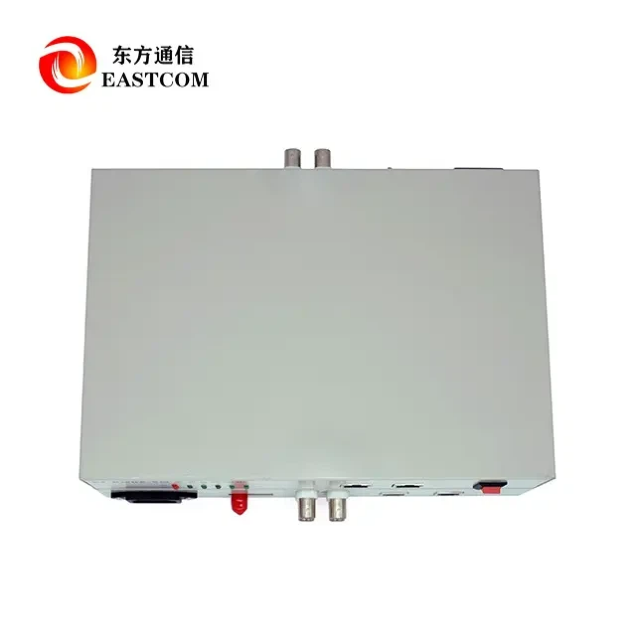
The fiber optic transceiver plays a critical role in various applications across industries. Some of the most common use cases include:
Data Center Interconnect: In modern data centers, fiber optic transceivers are used to interconnect servers, switches, and routers over long distances, ensuring high-speed data transfer with low latency. This is essential for maintaining the performance of cloud computing services, enterprise applications, and large-scale databases.
Telecommunications and ISP Long-Distance Fiber Connections: Telecom companies and Internet Service Providers (ISPs) rely on fiber optic transceivers to connect distant locations, including regional and international connections. These transceivers facilitate high-capacity, long-distance communication with minimal data loss.
Enterprise Campus Networks: In campus networks, fiber optic transceivers are used to connect buildings and offices within a company or educational institution, enabling fast and reliable communication across the entire site.
Industrial Automation and Factory Networks: Fiber optic transceivers are also essential in industrial environments, where they provide a reliable and interference-free network connection between machines, sensors, and control systems. These devices support high-speed data transfer and are crucial in automation, monitoring, and remote control applications.
Fiber to the Home (FTTH) or Broadband Networks: In residential broadband applications, fiber optic transceivers enable high-speed internet access by connecting end-user devices to the fiber optic backbone, providing greater bandwidth and faster speeds than traditional copper-based connections.
When selecting a fiber optic transceiver for your network, there are several key factors to consider to ensure optimal performance:
Network Requirements: Start by assessing your network’s needs, including data rate (1G, 10G, 25G, 40G, 100G, etc.), transmission distance (short-range vs. long-range), and fiber type (single-mode vs. multi-mode). Choosing the correct fiber optic transceiver module that matches your requirements will ensure efficient and reliable communication.
Form Factor: Different fiber optic transceiver form factors such as SFP, SFP+, QSFP, and QSFP-DD cater to various network types. SFP is ideal for low to moderate-speed networks, while QSFP-DD and similar high-density modules are suited for high-bandwidth applications such as data center interconnects.
Connector Type and Compatibility: Ensure that the fiber optic transceiver you select is compatible with your existing network infrastructure. The connector type (e.g., LC, SC, MTP) should match the fiber optic cables used in your network, and the transceiver should be compatible with your switches, routers, and other networking equipment.
Quality and Reliability: When selecting a fiber optic transceiver, consider important parameters such as receiver sensitivity, transmit power, and optical return loss. These factors impact signal integrity and network reliability, especially in environments with high electromagnetic interference.
Scalability and Upgradability: Future-proof your network by selecting transceivers that allow for easy upgrades. Modular designs enable you to increase your network’s bandwidth, distance, and capacity without major infrastructure changes.
The fiber optic transceiver is a vital component in modern network communication, offering high-speed, reliable, and scalable solutions for various applications, including data centers, telecommunications, and industrial networks. With its ability to handle large amounts of data over long distances with minimal interference, it is an essential investment for businesses seeking to upgrade their network infrastructure for the demands of the future.
As you plan your network upgrades, consider integrating fiber optic transceivers to ensure optimal performance and future scalability. Shandong Dongfang Communication Technology Co., Ltd. offers a wide range of high-performance fiber optic transceiver solutions designed to meet your specific networking needs. Contact us today to learn more about our products and find the perfect solution for your network.
What is the main function of a fiber optic transceiver?
A fiber optic transceiver converts electrical signals into optical signals for transmission over fiber optic cables, and vice versa, enabling high-speed communication over long distances.
Why should I use fiber optic transceivers instead of copper cables?
Fiber optic transceivers offer significant advantages over copper cables, such as higher data transmission speeds, longer distances, and immunity to electromagnetic interference, making them ideal for modern, high-demand networks.
What factors should I consider when choosing a fiber optic transceiver?
Key factors include data rate, transmission distance, fiber type (single-mode or multi-mode), and the form factor of the transceiver. Compatibility with existing network equipment and future scalability are also important considerations.
Can fiber optic transceivers be used in industrial applications?
Yes, fiber optic transceivers are widely used in industrial automation, providing stable and reliable communication for factory networks, machines, and control systems, with high resistance to interference.


